TANZANIA WOMEN’S ACTIVE ROLES IN THE MARITIME INDUSTRY
The maritime industry in Tanzania is a critical sector of the economy, encompassing all activities related to the transportation of goods and people by sea, inland waterways (such as lakes Victoria, Tanganyika, and Nyasa), and the associated port infrastructure. As the industry modernizes, the increasing participation of women brings diverse perspectives and crucial technical skills that are now core components of maritime operations, from vessel management to environmental protection.
Empowering women to overcome sector barriers is key to strengthen the industry’s workforce, as female professionals are vital for driving safety improvements, innovation, and long-term sustainability as the maritime industry it is a heavily regulated sector focusing on maritime safety, security, vessel registration, and the protection of the marine environment, with over 90% of the country’s international trade which relying on sea transport.
Tanzania women are increasingly involved in the maritime sector, moving from historically marginalized, low-paid roles to positions in the leadership, technical operations, and the blue economy. While women still face challenges in this traditionally male-dominated industry, targeted efforts by organizations like Center for Maritime Safety and Security in Tanzania and the Women in the Maritime Sector in Eastern and Southern Africa (WOMESA) Tanzania Chapter are driving, mentoring, and promoting women into roles within shipping, port operations, and marine science.
The inclusion of women in the maritime industry is a strategic imperative, with their contributions as skilled seafarers, engineers, and leaders serving as core components of a more innovative, safe, and sustainable future for global shipping.
KEY AREAS OF TANZANIA WOMEN’S INVOLVEMENT AND INITIATIVES
The government and private sectors are working together to enhance the participation of women, recognizing that their involvement is crucial for sustainable economic growth and the development of the maritime industry in Tanzania. Key areas of focus include: active roles in the maritime industry and key supporting organizations and initiatives.
Active roles in the maritime industry
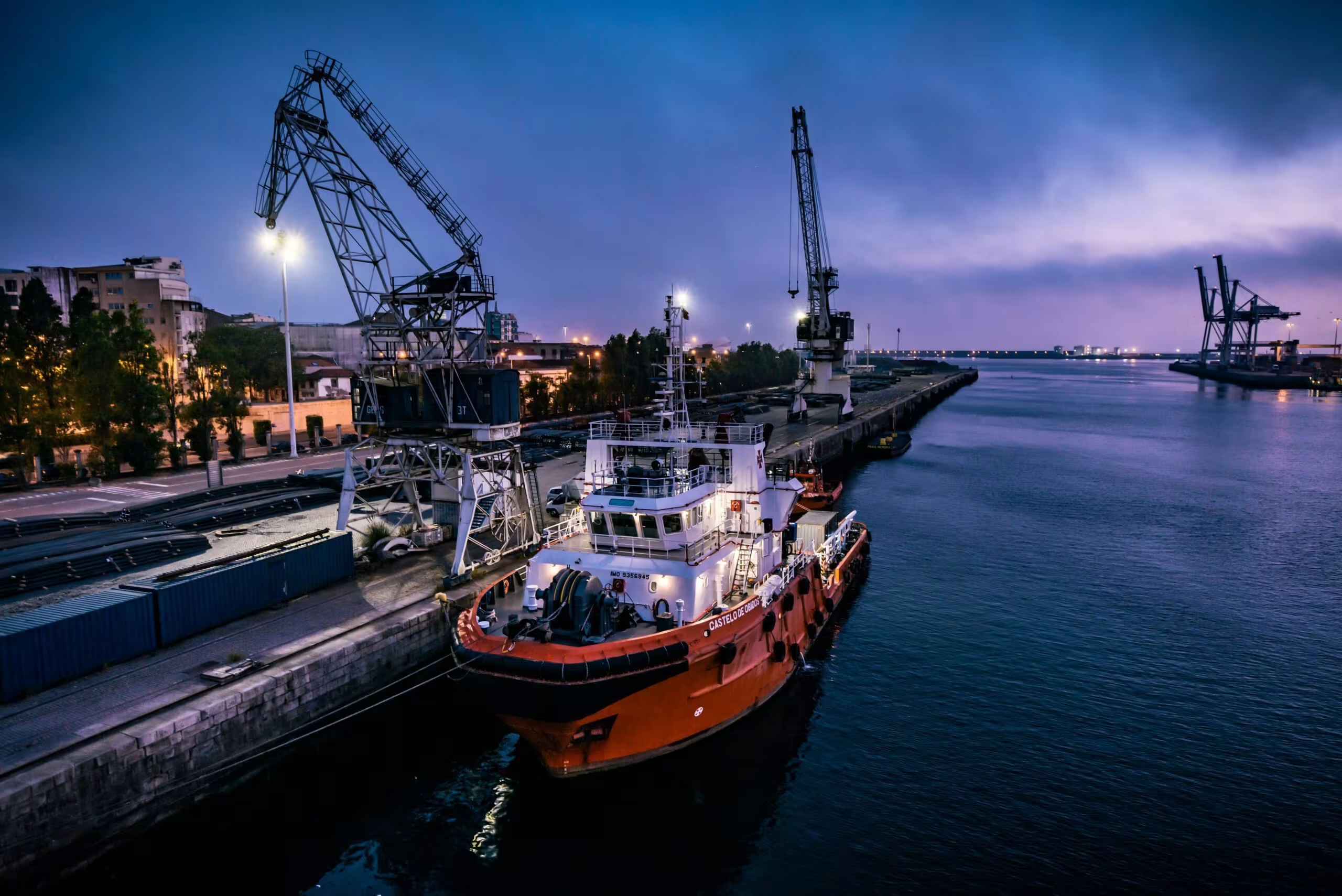
Port and terminal operations which are essential, daily activities involved in transferring cargo or passengers between ships and land-based transport. Women are breaking barriers in shore-based roles, including at the Tanzania East Africa Gateway Terminal Limited (TEAGTL), where they are involved in logistics, administration, and management.
Seafaring and technical positions involve crucial roles in navigating, operating, and maintaining vessels and offshore equipment, ranging from Deck Officers and Engineers to Electro-Technical Officers (ETOs). These role are evolving from manual labor to able-skilled tech positions, focusing on digital control systems and advanced machinery. Women are working as engineers and operators, such as female chief engineers on ferries, and are increasingly joining vessel, ship management, and pilotage roles.
Blue economy as it encompasses all economic activities related to oceans, seas, and coasts including fishing, tourism, and transportation. Women are pivotal in the Blue economy’ leading in seaweed farming, small-scale fisheries, and coastal tourism as the contribute to over 50% of the processing workforce in these sectors. Despite constituting nearly half of the fisheries workforce, women are often confined to low-paid, informal, or undervalued position.
Maritime administration and law together, they manage vessel standards, shipping, and international conventions. They refers to the government bodies (flag states) that enforce laws, ensuring safety,security, and environmental compliance include body of legal principles governing maritime commerce, navigation, and seafarer rights while maritime law is a body of legal principles governing maritime commerce, navigation and seafarer rights. Currently women are increasingly employed in specialized, technical, and operational roles within maritime administrations.
Key supporting organizations and initiatives
The following are some of core partners and collaborators joined in hand to supporting Tanzania women in maritime industry:
Women in the Maritime Sector in Eastern and Southern Africa (WOMESA) Tanzania Chapter since its inaugurated in 2011, this organization promotes women’s participation in the maritime sector through mentorship, advocacy for gender equality, and training. Womesa also run a “Catch Them Young” program to visit schools for the aim of promote maritime careers among young girls. Through its effort to integrating women in maritime sector, it also supports them by advocating for increased female representation at senior management levels, providing mentorship, and promoting the blue economy for sustainable women development.
International Maritime Organization (IMO) which provides training, scholarships, and fellowships to Tanzanian women to improve their technical skills and employability. IMO supports gender equality and the empowerment of women through gender specific fellowships; by facilitating access to high-level technical training. Within this historically male dominated industry, IMO has been making a concerted effort to help the industry move forward and support women to achieve a representation that is in keeping with twenty-first century expectations.
Center for Maritime Safety and Security in Tanzania (CMSS) has been obliquely collaborating with Blue Women Africa to promote gender equality and empower women in coastal communities. CMSS and various industry stakeholders are at the forefront of supporting women in the maritime sector, driven by the goal of enhancing gender diversity in a historically male-dominated industry where women currently represent only about 2% of the global seafarer workforce. The organization provides training, skills development, and volunteering opportunities to enhance women’s competitiveness in the maritime field.
The Women’s International Shipping & Trading Association (WISTA) International works to bridge the gender gap, collaborating with the IMO to collect data on women in the sector. It is also a global networking organization with over 5,000 members across 62 countries, dedicated to increasing women’s presence, diversity, and leadership in the maritime, trading, and logistic sectors. The organization advocate for gender equality through mentoring, education, policy lobbying and industry surveys.
Blue Women Africa as an independent non profit organization dedicated to promote gender equality, empower women, and develop entrepreneurship for Africa women in the maritime. It supports professional women, entrepreneurs, and institutions across 22 African countries. The organization is also a platform dedicated to celebrating, supporting, and amplifying the voices of women shaping the blue economy in Africa.
In summary, role of women in the maritime industry is transitioning from a niche topic to a strategic imperative for the sector’s sustainability, innovation, and growth. While women have historically been marginalized in this field, female seafarers comprising only about 1.2% to 2% of the global workforce. Their increasing participation is vital for filling talent gaps and introducing new perspectives.