
SEAWEED FARMING AS THE KEY SOURCE OF INCOME TO SUPPORT WOMEN OF TANZANIA
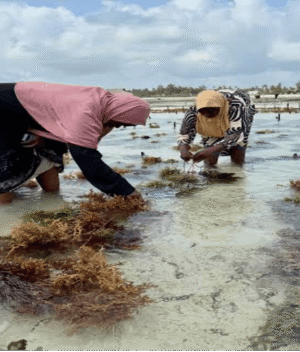
Seaweed farming in Tanzania, particularly in Zanzibar and Pemba, is a major coastal industry and a key source of income for over 25,000 farmers, primarily women. It is a vital economic lifeline for Tanzanian women, who comprise over 80% of cultivators. Seaweed farming empowers them economically by providing an independent, consistent income, which improves household food security, education, and living standards.
Beyond financial autonomy, the industry has fostered women’s agency and leadership within coastal communities. Many women are now increasing their earnings by processing raw seaweed into value-added products like soaps and cosmetics which allowing them to capture more profit locally.
It is a climate-smart, low-capital development strategy that empower coastal women by providing a reliable income, fostering financial independence, and elevating their decision-making status within families and communities. Unlike terrestrial farming, it requires no expensive fertilizer or land, allowing women to work near the shore, earn their own money, and support their families directly. This blue economy role has become a crucial pathway for economic empowerment, social mobility, and climate resilience in coastal communities.
Historically, women in many Tanzania coastal communities were excluded from deep-sea fishing and often lacked equal access to arable land. Seaweed farming is an ocean-based activity that does not require land ownership or the heavy dangerous equipment associated with traditional commercial fishing. Since seaweed farming is viewed as a restorative practice as it requires no chemicals, fertilizers, or freshwater, and helps sequester carbon while supporting marine biodiversity, it aligns with the women’s role as protectors of the coastal environments which their families depend on.
On the role of social and cultural shift, seaweed farming has allowed women to challenge traditional gender norms. As they become key breadwinners and leaders in their cooperatives, they gain influence in community decision-making, which was previously often closed to them. Here is how seaweed farming acts as a key source of income to support women in Tanzania:
- Economic empowerment and independence
Seaweed farming offer a dependable, low-coast entry point into the blue economy hence providing cash income where few other options exists for women in coastal communities. Earning from seaweed are used for pay for essential household needs, including food, housing improvements, healthcare, and education for children. It enables women to become equal breadwinners, reducing their financial dependence on men.
- Value addition and entrepreneurship
Instead of selling raw seaweed at low prices to brokers, many women now process seaweed into products such as soaps, body creams, oils, shampoos, and edible items like jams, juice, and cookies. Women sell these value-added products at local community shops and directly to tourists at resorts to provide higher profit margins.
- Cooperative and support systems
Women form groups and cooperatives to share resources, improve negotiation power, and purchase farming equipment.Financial support from organizations include Aqua-Farms Organization (AFO) provide rent-to-own microcredit models with 0% interest loans to access gear such as fiber boats, engines, and ropes which allowing women to farm in deeper waters suitable for higher yield produce and disease reduction.
- Social recognition and autonomy
Originally, seaweed farming was seen as a side activity, but as women have proven to be the most consistent farmers, they have earned respect and increased decision-making power within their families and communities. The cash income provides dignity, allowing women to improve their living standards and better prepare for school fees and households emergencies.
While climate change specifically warming ocean temperatures poses a threat, women farmers have organized into cooperatives to adapt. By working in groups, they manage farming challenges, shift to deeper-water cultivation, and invest in value-added products which command higher prices than raw seaweed. It is widely recognized by development organizations and researchers that women lead the industry because:
- Seaweed farming has shifted many women from subsistence activities to a reliable cash income. This financial autonomy allows them to pay for school fees, improve their homes, and support their families without sole dependency on others.
- Coastal women have gained a stronger voice and leadership roles within their communities, challenging traditional way of life. This collective engagement often leads to better advocacy for their needs and shared knowledge regarding climate adaptation.
- Moving beyond just harvesting, many women are now trained to process seaweed into products such as soaps, lotions, and creams. This value chain approach significantly increases their profit margins and creates connections to the tourism and export markets.
In contempt of benefits from seaweed farming, women still experience challenges due to climate change, financial illiteracy and limited market information. However, such farming is now considered the third-largest contributor to foreign earnings for economic development in Zanzibar and for many coastal households, seaweed farming serves as a critical alternative to fishing, which may be impacted by diminishing stocks. This diversification makes families more resilient to environmental and economic shocks.
Centre for Maritime Safety and Security in Tanzania is proud of the seaweed women for leading the way in sustainable community-driven empowerment. You are not just growing seaweed, you are growing resilience and forging financial independence. We embrace the pioneering women farmers who protecting our marine ecosystems while paving the path for economic growth.